In early April, I was pleased to give an invited talk to the attendees at the Auto[nom] Mobil conference in Hanau, Germany. The event was part of a larger CARHS event occurring at the same time and place. CARHS has been around for many years, offering training and conferences in the broader auto tech space:
Active and passive vehicle safety
Driver assistance systems and autonomous driving systems
Testing technology and virtual testing
The April event was attended by safety and driver assistance engineers and scientists from car manufacturers and suppliers, as well as vendors and researchers.
An amazing amount of technical expertise was in the room, with many veterans of the space going back decades.
I was asked to lay out the U.S. situation for automated driving across robotaxi’s and trucks. Since robotaxis are in being covered heavily in the news, I focused primarily on the truck scene.
So… what follows is the presentation, with annotations as needed as well as updates since that time.

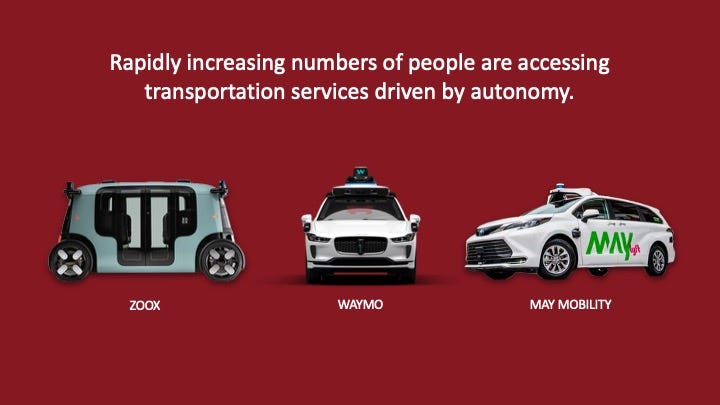
Based on a recent Wall Street Journal article, “the number of autonomous rides being conducted in the U.S. is expected to rise rapidly, from around 15 million in 2025 to about 36 million this year,” according to Morgan Stanley estimates.
“Morgan Stanley estimates roughly half of the American population will have access to a robotaxi service within the next three years. By 2030, the figure is expected to hit nearly 750 million rides.”
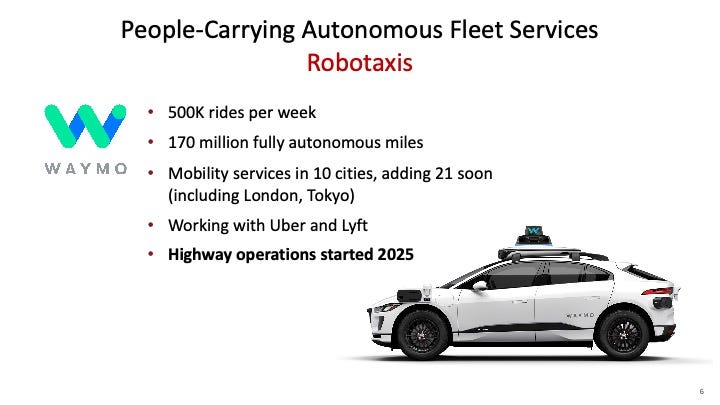
The importance of expanding from street operations to highway operations cannot be overestimated for the robotaxi space. I’ve been in many Waymo trips which were much longer because the vehicles didnt use freeways. The competition to human-driven ride hailing will peak once the robotaxis are highway-active.
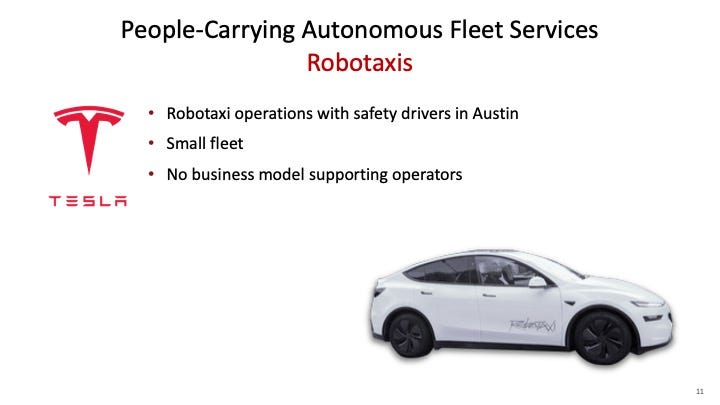
I have been a Tesla autonomy skeptic every since Elon Musk started yammering about it years ago. Sure, the company has the heft and expertise to do it, but what Tesla has accomplished so far in the robotaxi world is minor.

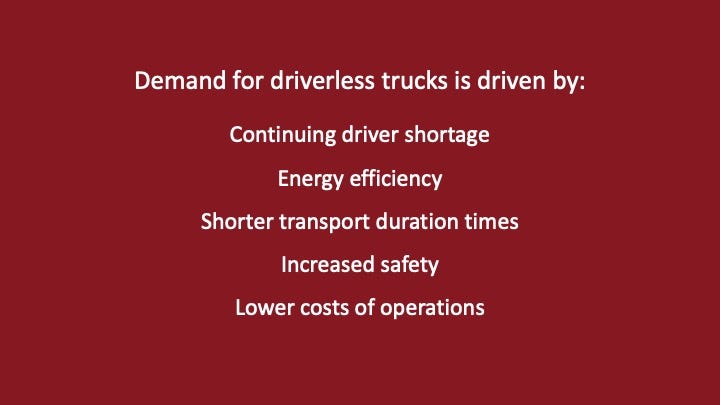
I want to emphasize the importance of shorter trip duration times. Human-driven trucks must stop so that the driver can observe a Federally-mandates rest period. thus an expensive asset — the truck — sits un-used during the rest period.
With autonomous trucks, the trucks can be in almost continuous operations, and the long-haul freight can much more quickly.
As autonomous trucks scale, there will be massive positive impacts on supply chain operations. As one example, quasi time sensitive freight now shipped via air could instead be shipped in autonomous trucks.
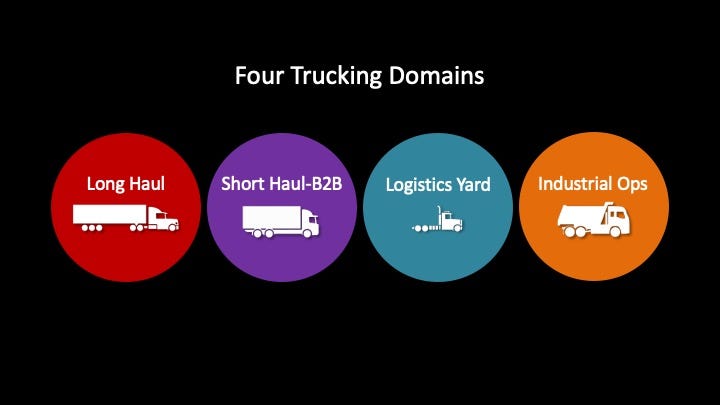
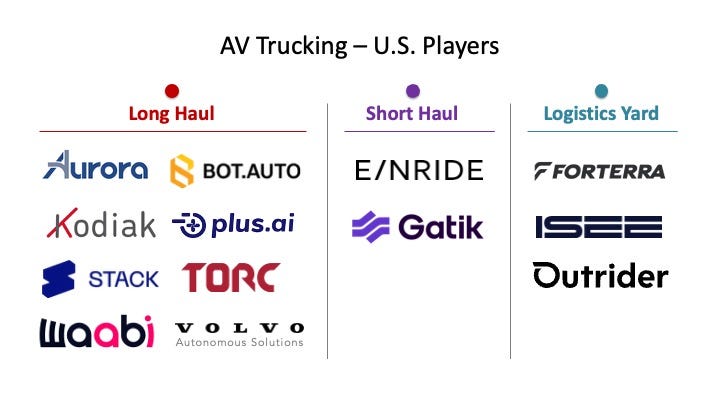
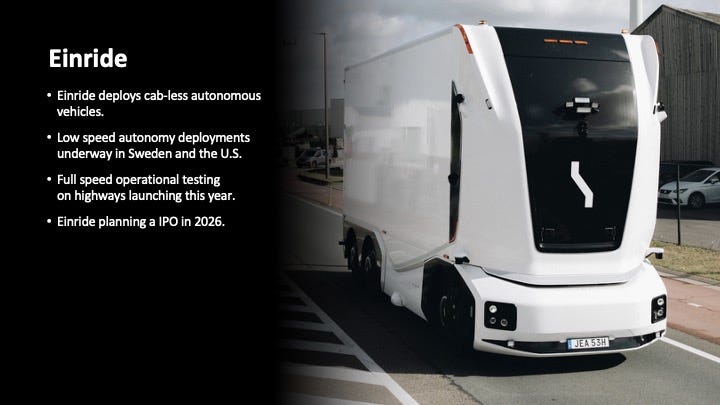
Next time I give this presentation, a new name will appear! In late April, Humble.ai emerged from stealth with a $24 million seed round. Their prototype shows a tractor-trailer with no driver compartment. Its sort of a highway version of Einride’s approach. More info to come.
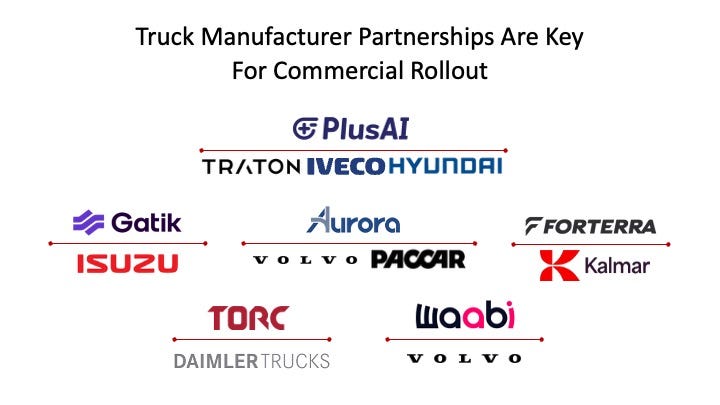
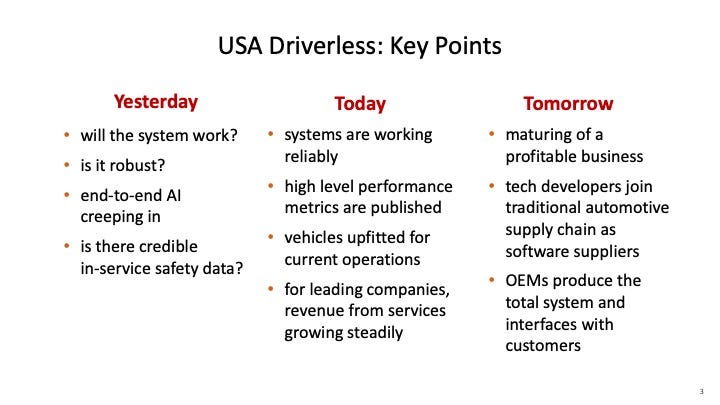
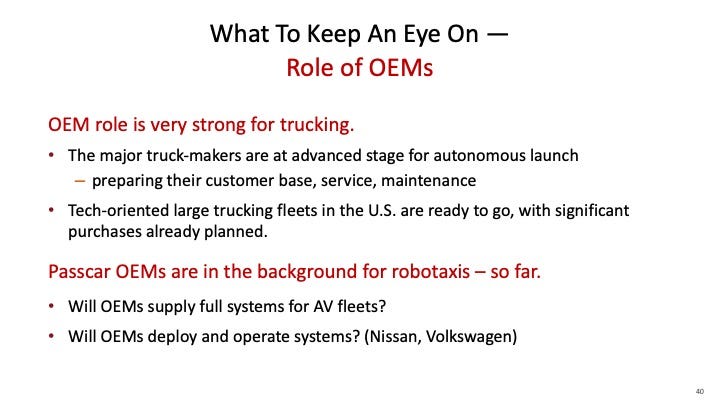
This is the most important slide of the truck section. The days of geeky Silicon Valley guys trying to get trucking companies to use their tech will mostly come to an end - the path the market will be through the OEMs. Autonomy will be accessed the same way other truck innovations have occurred over the years: via the manufacturer.
This is good for safety. The truck OEMs have a lot to loose if the tech is flakey. If they bring it to market, it has been through a gauntlet of safety validation and testing.
But there are exceptions to this rule, as you’ll see below. Two companies are going it on their own.
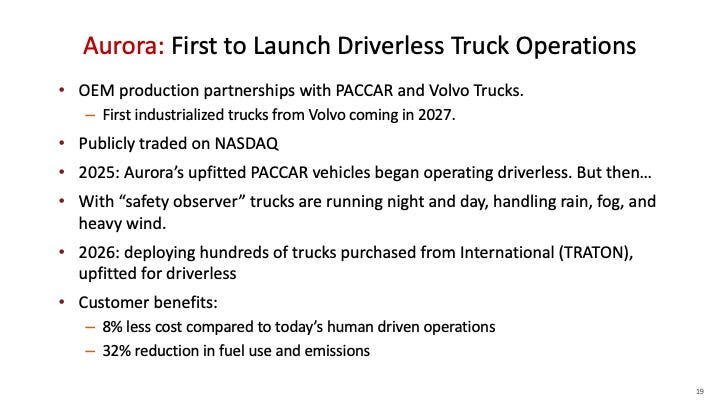
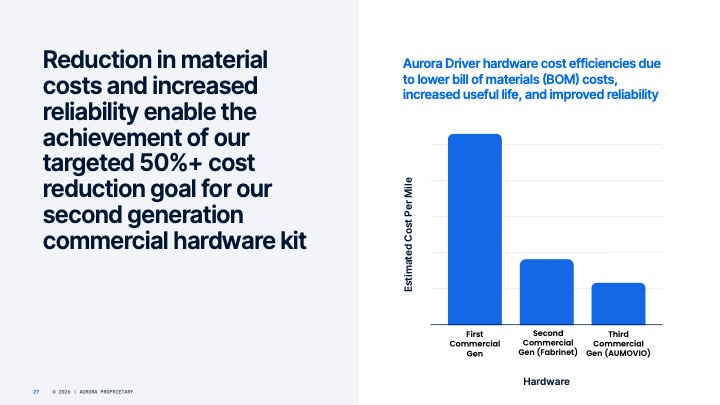
Being publicly traded, Aurora is under scrutiny for its burn-rate, as well as material costs. Thus this recent slide addressing the issue.
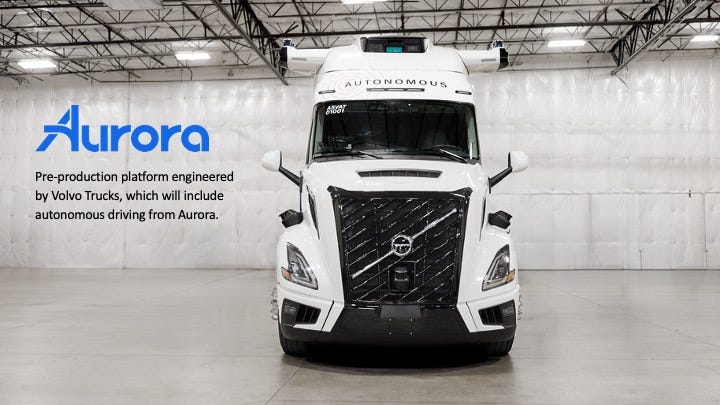
In late April, Aurora announced an expansion of their hauling services for freight carrier Hirschbach. The companies announced a non-binding MOU for Hirschbach to own and deploy 500 Aurora-powered autonomous trucks, with deliveries expected in 2027. Most likely these will be production Volvo trucks which integrate the Aurora autonomy.
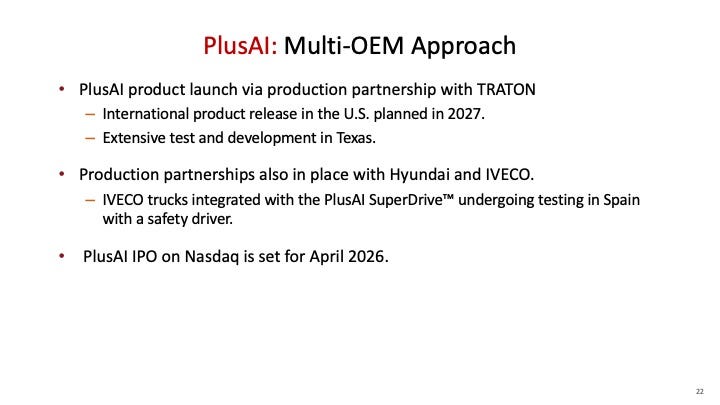
Update: On April 24th, PlusAI investors decided that the market conditions in late April were not conducive to going public, so they cancelled the SPAC. Instead, existing investors are plowing in further funding so that PlusAI can continue operations and continue the rapid pace in which they are bringing autonomy to the market via OEM partner International.
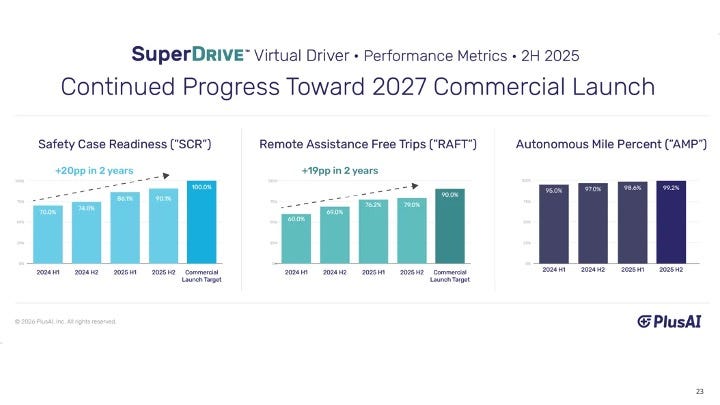
The PlusAI charts above are similar to metrics that Aurora was publishing last year as Aurora moved into driverless operations. Although there is useful indicative information here, the metrics are quite broad-brush metrics. While external analysts want to see more “meat” this makes sense if you’re PlusAI or any other developer — the detailed info is shared with their OEM partners and potential customers. And it stops there.
https://www.freightwaves.com/news/international-plusai-ryder-autonomous-trucking-temple-to-laredo
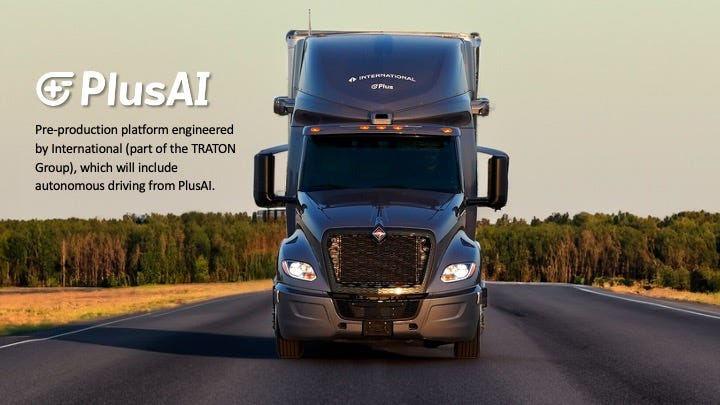
Update: In early April, International, PlusAI and Ryder made the move from autonomous trucking on a test track to live freight operations, running shipper cargo on the Temple-to-Laredo corridor.
The trial actually launched late last year. Results today show 100% on-time delivery and operating autonomously 92% of the time, despite heavy construction.
International and PlusAI built the system together from the chassis up. Quoted in Freightwaves, James Cooper, lead of autonomous solutions at International, said “We are really trying to co-develop an integrated concept. They are in the lead for the software for the virtual driver that is at the heart of the system, and we have a lot of collaboration on the hardware that then needs to support that. We are then responsible for industrializing that set of hardware and building an operational wrapper around the vehicle so that we can deliver the uptime and performance.”
Amelia Vadalia, PlusAI’s commercialization lead, noted in the Freightwaves article that “The lane is also generating valuable data that is speeding up software development cycles. With the International and PlusAI process, we are looking at a matter of weeks. Constantly the vehicles are out collecting more data. All the data that we are collecting will feed back into our machine learning loop and then we are able to improve the software.”
Disclaimer: I am an Advisor and Shareholder with PlusAI.
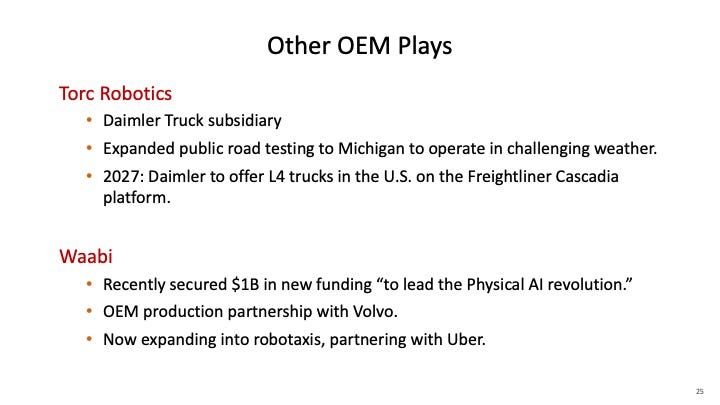
Less detail does not imply less capability. Compared to a few years ago, when all the startups were compelled to keep pushing out flashy news releases, we’re now in the phase of commercialization and companies with OEM partnerships are heads-down, aiming for the OEM production milestone. But….
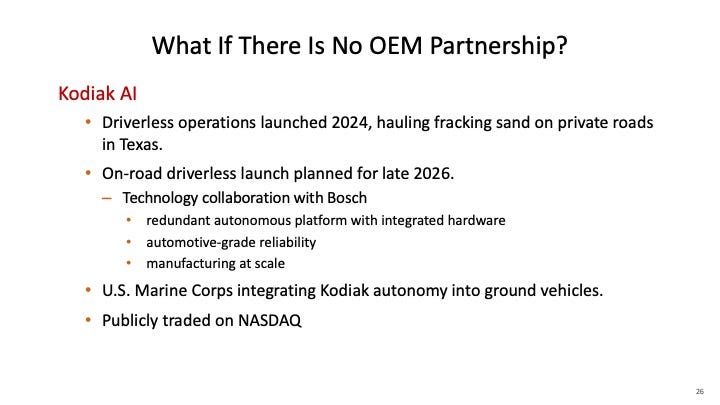
Kodiak AI and Bosch begin hardware deliveries for autonomous trucks
According to Freightwaves, at the end of April, Kodiak AI announced that Bosch has begun delivering critical hardware for its autonomous trucks, giving a sense of their momentum with their medium-volume production program.
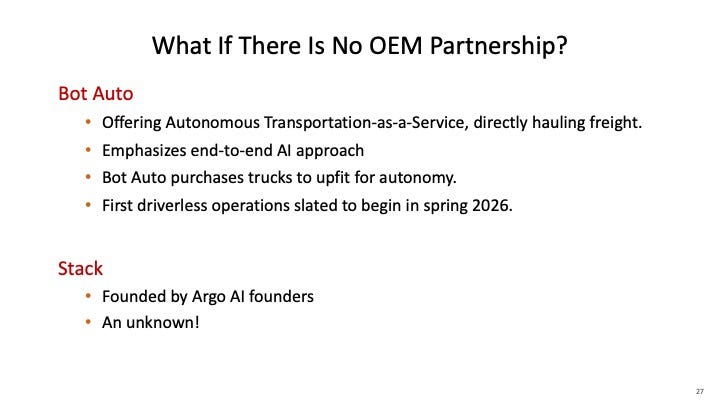
At the end of April, Bot Auto launched driverless operations. See my April 30 Substack article.
Stack has chosen to keep their heads down, they dont share milestones or partner news. Thus, an unknown. But their founders are come from the founding group of Argo AI, which had high capability in aiming for the robotaxi market until their owners, Ford and Volkswagen, pulled the plus. I have a feeling the Stack team knows what they’re doing. Sometime later this year, an announcement from them that they have secured an OEM partnership wouldnt surprise me.
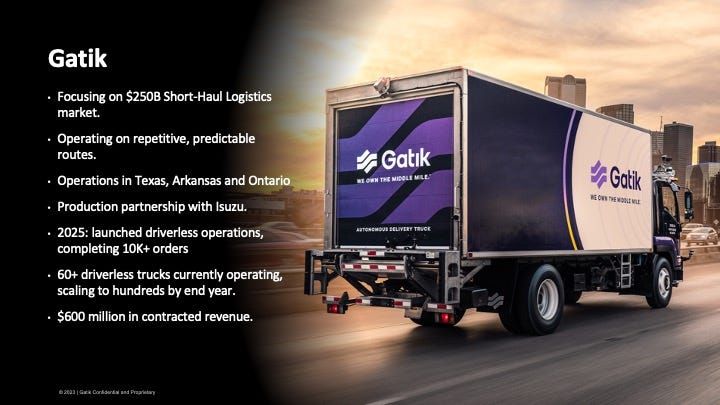
Disclaimer: I am a Shareholder in Gatik.
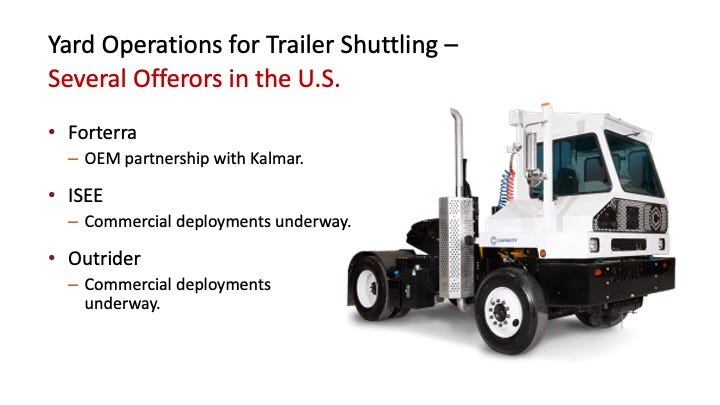
Disclaimer: I am an Advisor and Shareholder with Forterra.
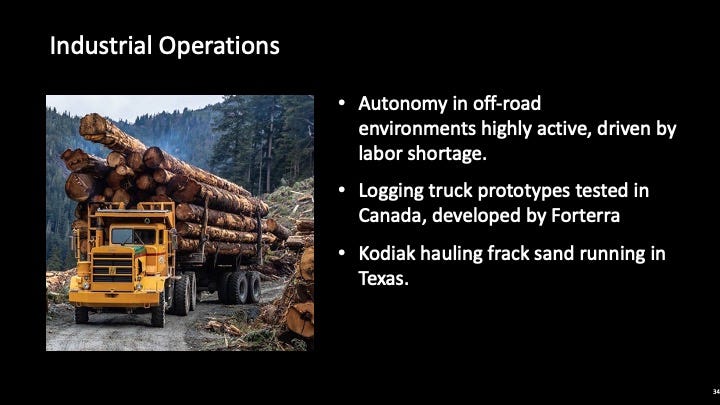
Industrial operations are growing across a wide range of use cases. New startups are going for this space. This slide just scratches the surface!
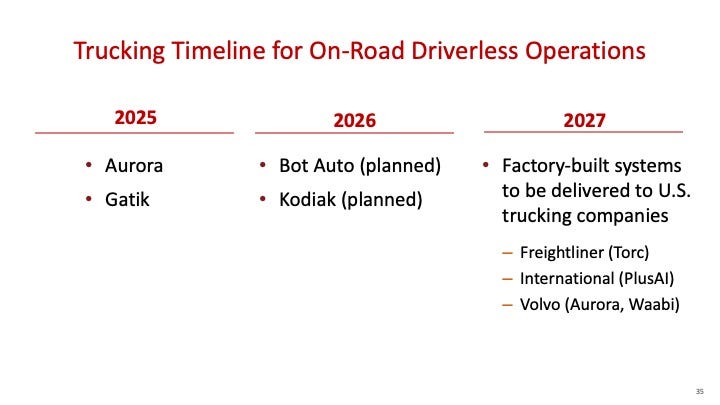
As noted above, Bot Auto is now running driverlessly on public roads in Texas.

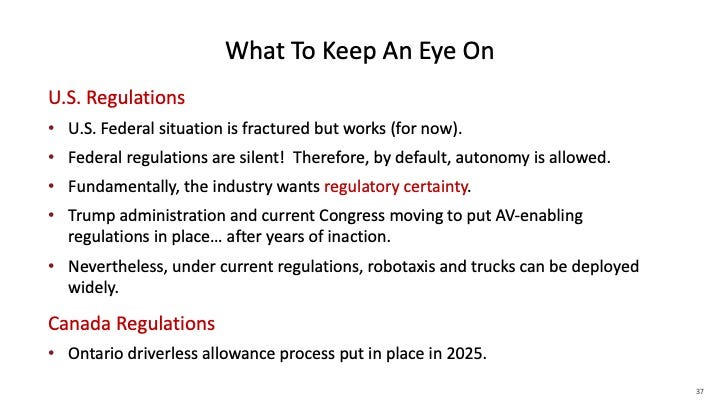
The Very Big news in the U.S. regulatory space is California’s new regulations allowing autonomous truck operations for the first time. Ironic, since most of the AV truck developers are based in California!
California’s approach could affect regulatory development on the Federal side.
There’s a lot of meat in the CA regs. To dive in, take a look here.
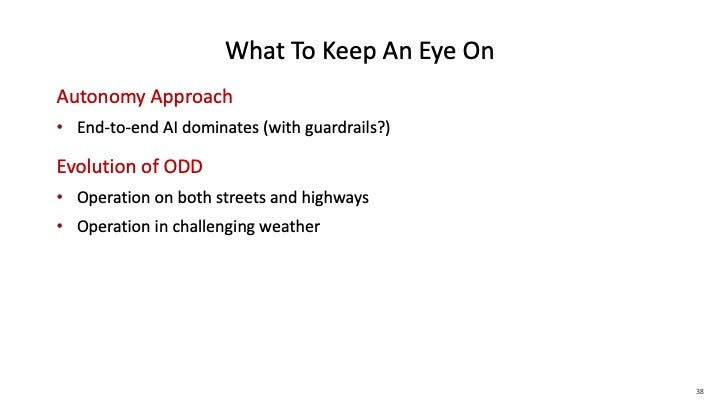
In both the robotaxi and trucking domains, there are enough actors competing with one another that we will see a vigorous horse race as to who can operate in all road types and all conditions. Some of the companies are very far along on both fronts. This is good for the end user community.
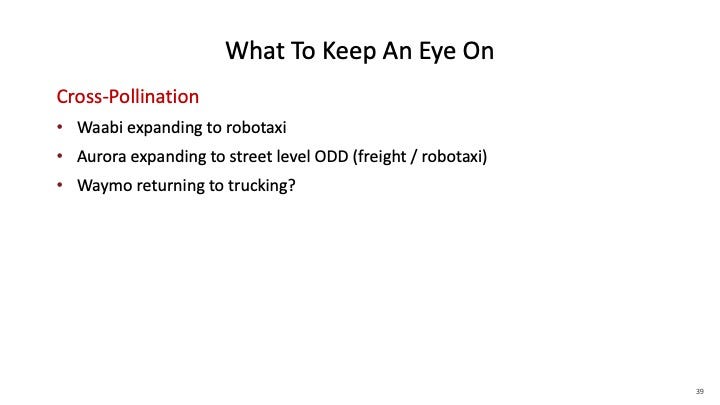
Waymo made a massive investment in truck autonomy in the early years and even had a production deal with Daimler. They put this aside during an economic downturn in order to focus on their founding principle of people movement. Waymo has extensive IP and expertise that can be applied to the trucking platform if they want to go there. I think they will.
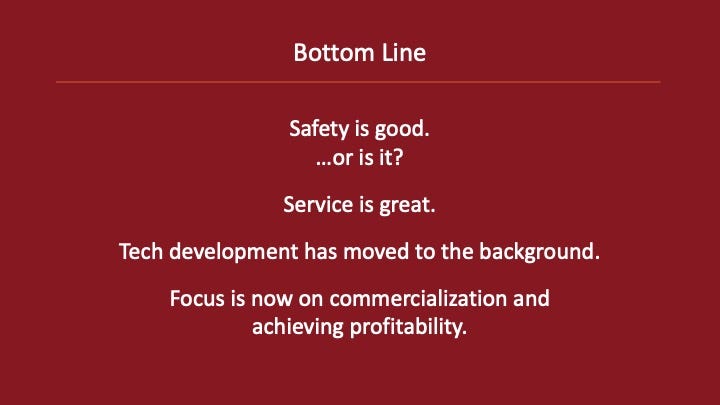
Safety is good… or is it? Here I’m pointing to the current situation in which — for the most part — the tech developers are telling us how safe their AV fleet is. There not published independent assessments. Yes, NHTSA requires reporting of crashes; safety analysts would say this is just a modest measure. A robust understanding of all autonomy operations on public roads does not exist. The NHTSA reporting indicates the operating AV’s are doing a pass-able job, but in-depth knowledge on public road operations is lacking. New Federal regulations may address this.